
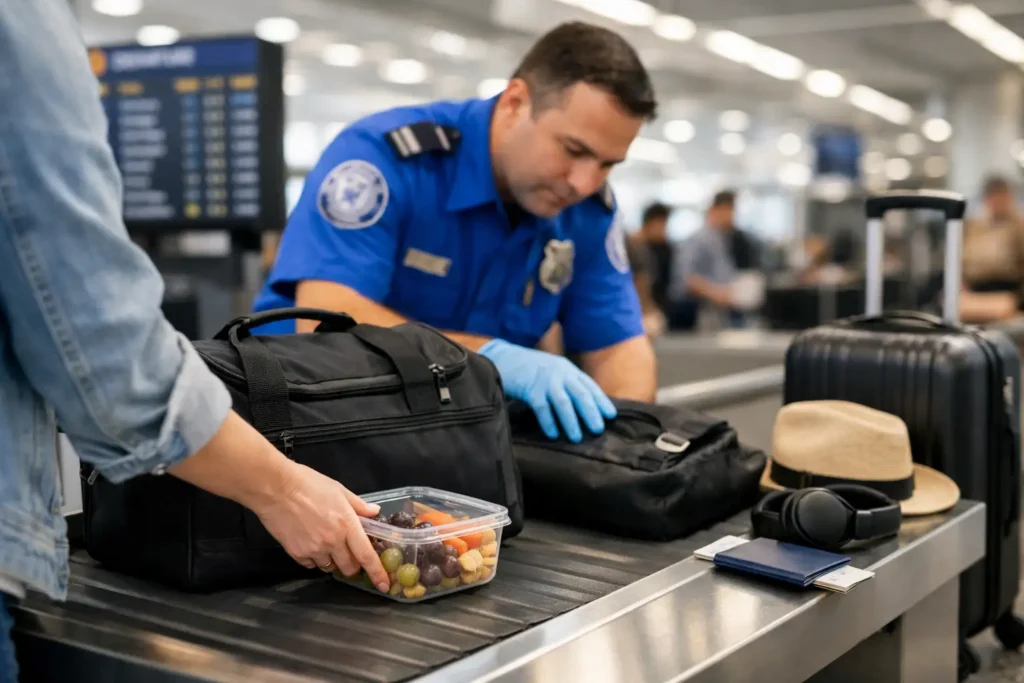
A pack of THC gummies may look like ordinary candy, but an airport is not an ordinary setting. If you are asking, can you fly with edibles domestically, the practical answer for marijuana edibles is no – not legally or risk-free. Flying between two states with legal recreational cannabis does not create a legal exception, and a medical card does not change the federal rules that govern air travel.
That can feel counterintuitive when you can legally buy an edible at your destination or in your home state. But the moment you bring cannabis through an airport and onto a commercial flight, federal law, airline rules, airport policies, and state law can all come into play. For travelers who want a vacation without legal weed hiccups, the smart move is to leave marijuana edibles at home.
Why Flying With Edibles Is Different From Driving
Cannabis laws in the United States are a patchwork. Adult-use marijuana may be legal under state law in places such as California, Colorado, Nevada, Illinois, and Massachusetts, yet marijuana remains illegal under federal law. Airports and commercial airspace operate under federal authority.
That means carrying a THC brownie, cannabis beverage, or infused gummy from one legal state to another can still be treated as transporting a federally controlled substance across state lines. It does not matter whether your flight is nonstop, whether both states allow recreational cannabis, or whether you bought the product from a licensed dispensary.
A short flight from Las Vegas to Los Angeles is still interstate travel. So is a flight between two cities in the same legal state if the route or airline operation involves federal jurisdiction. The simple travel rule is this: state legalization gives you rights within that state. It does not give you permission to take marijuana through airport security or onto a plane.
Can You Fly With Edibles Domestically in Carry-On or Checked Bags?
No bag type makes marijuana edibles acceptable. Putting them in checked luggage does not make the issue disappear, and carrying them in your personal item does not make them legal. The concern is possession and transportation, not whether the package is in the overhead bin or the cargo hold.
The Transportation Security Administration says its security officers are focused on safety threats, not actively searching for drugs. Still, if an officer finds what appears to be marijuana during screening, TSA may refer the matter to law enforcement. What happens next can depend on the airport, the amount involved, local law, and the judgment of responding officers.
Do not mistake TSA’s primary mission for permission. Screening equipment can reveal unusual food items, containers, and dense packaging, and a bag inspection can turn an easy travel day into a stressful conversation. Trying to disguise edibles as regular snacks can also create a bigger problem if you are questioned. Responsible cannabis travel means not building your plan around the chance that nobody notices.
Airlines also have their own conditions of carriage and conduct rules. Even where local police do not pursue a possession issue, an airline can refuse boarding or take action when it believes a passenger is violating the law or creating a safety concern.
Medical Marijuana Does Not Create a Flying Exception
A state-issued medical marijuana card can allow a patient to buy and possess cannabis under that state’s medical program. It does not authorize marijuana on a federally regulated flight. There is no nationwide medical cannabis travel pass that overrides federal prohibition at the airport.
This is especially frustrating for patients who rely on edibles for pain, sleep, nausea, or anxiety. Plan ahead instead of assuming your prescription-like recommendation travels with you. Depending on the destination, a clinician may be able to discuss legal non-cannabis options, or you may be able to access a state medical program after arrival. Those details vary widely and should be checked before the trip.
Never share edibles with another traveler, including a friend who has a medical card. That adds another layer of legal and personal risk.
What About CBD, Hemp, Delta-8, and Other Edibles?
Not every edible contains marijuana, but labels can be confusing. Hemp-derived products containing no more than 0.3% delta-9 THC by dry weight are federally legal under the 2018 Farm Bill. In theory, that can make some CBD or hemp products different from marijuana edibles for domestic travel.
In practice, caution is still warranted. States can restrict certain hemp-derived cannabinoids, including delta-8 THC, and product labeling is not always reliable. A package that says “CBD” may contain detectable THC, while a large edible can contain a substantial total amount of THC and still claim to meet a percentage-based hemp definition. Local law enforcement and airport staff are not there to interpret a complicated cannabinoid formula on the spot.
If you choose to travel with a legal hemp product, keep it in its original, clearly labeled packaging and confirm that it is permitted at both your departure and arrival points. Do not assume that a product sold at a gas station, smoke shop, or dispensary is automatically legal everywhere. If there is any doubt about its contents or legality, leave it behind.
A Better Plan for Cannabis-Friendly Trips
The best cannabis travel strategy is destination-based: learn the rules where you are going, arrive first, and only buy and consume products in ways allowed under local law. That may mean visiting a licensed dispensary after checking in, choosing a cannabis-friendly destination with clear adult-use rules, or deciding cannabis is not worth including on a particular trip.
Before you pack, consider four practical questions:
- Is adult-use or medical cannabis legal at the destination, and are nonresidents allowed to purchase it?
- Can you consume cannabis in a private accommodation, or are public-use restrictions strict?
- Does your hotel, rental host, resort, or cruise operator prohibit cannabis on the property?
- Can you legally dispose of any remaining products before heading to the airport?
The last question matters more than many travelers expect. You should not carry leftovers through security just because the package is nearly empty. Do not leave edibles in a rental car, hotel room, or airport bathroom either. Follow local disposal guidance where available, and avoid giving cannabis to someone else unless that transfer is clearly legal under local law.
If your destination does not have legal access, treat that as part of the trip’s character rather than a challenge to work around. Plenty of great cities offer food, nightlife, nature, music, and culture without asking you to gamble with federal law on the way there.
If You Accidentally Reach the Airport With Edibles
Real life happens. Maybe a gummy bag is tucked into a backpack pocket from a previous weekend, or you forgot about a cannabis chocolate bar in a toiletry pouch. The safest response is to stop before entering the TSA screening line and resolve the issue legally.
Do not attempt to consume a large amount quickly, give it to a stranger, hide it in the terminal, or abandon it where a child or another traveler could find it. Ask airport personnel about lawful disposal options if they exist, or leave the airport and handle the product according to local rules. Some airports in legal-cannabis states have disposal bins outside security, but their presence does not authorize you to bring cannabis into the terminal or onto a flight.
If law enforcement becomes involved, remain calm and respectful. This article is general travel information, not legal advice, and local consequences can differ sharply. Avoid making assumptions based on a friend’s airport story or a viral social media post.
The Bottom Line on Domestic Edible Travel
For marijuana edibles, domestic flights are not a loophole between legal states. The federal status of cannabis makes airport and airline travel a poor place to take chances, whether the edible is in a carry-on, checked bag, or jacket pocket.
Save the exploration for the destination. Check local cannabis culture and regulations, purchase only where permitted after you arrive, consume with respect for your host community, and head back to the airport with your bags free of cannabis. That approach leaves more room for the good part of travel: seeing a new place without carrying an avoidable problem along for the ride.