
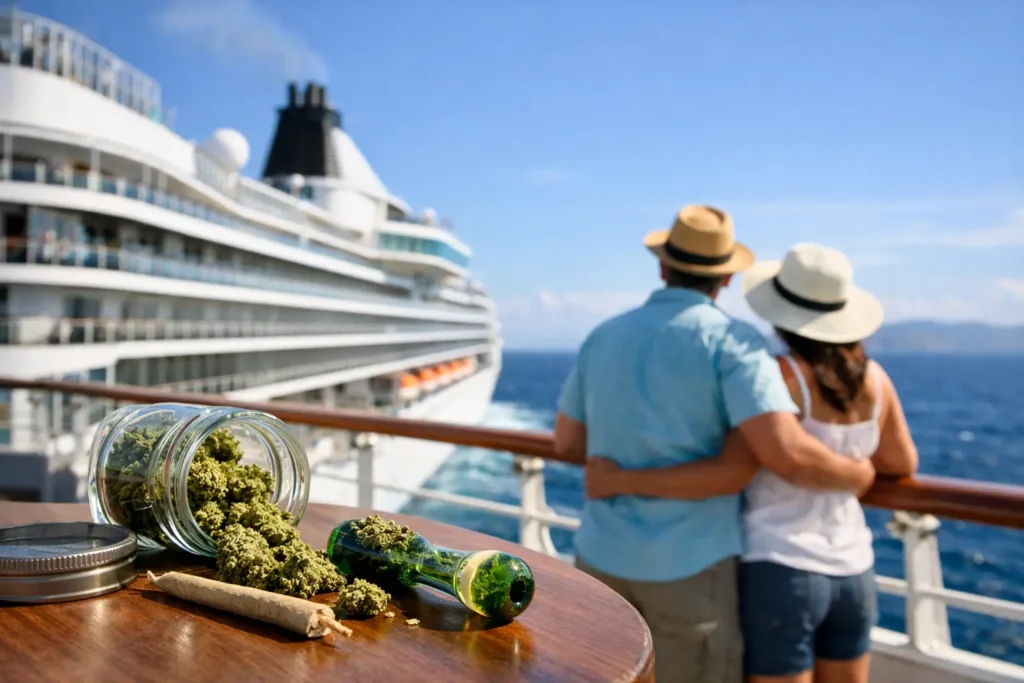
A cruise can look like the perfect cannabis vacation: sunny decks, private balconies, beach stops, and a different destination every morning. But cannabis friendly cruise rules are usually far stricter than the laws in the states or countries on your itinerary. A ship may leave from a legal market, stop in another one, and still prohibit cannabis everywhere on board.
That disconnect catches travelers off guard. The safest mindset is simple: treat a cruise ship as a controlled travel environment, not an extension of the cannabis laws at home. Pack your bags for the views, the food, and the shore adventures. Leave cannabis products out of your luggage unless your cruise line and every relevant authority clearly say otherwise.
The Reality Behind Cannabis Friendly Cruises
There is no universal category of cannabis-friendly cruise in the same way there are adult-only cruises or all-inclusive resorts. Mainstream cruise lines generally ban marijuana, THC vapes, edibles, concentrates, and cannabis-infused drinks, even when an adult-use state law allows possession at the departure port.
Why? Cruise companies operate across multiple legal systems at once. Their ships may be registered in another country, sail through international waters, visit foreign ports, and follow port-security requirements. They also have their own guest conduct policies and a strong incentive to avoid delays, fines, or problems with border authorities.
International waters do not create a legal free-for-all. That is one of the most persistent cannabis travel myths. A ship’s flag state, the cruise line’s policy, maritime law, and the jurisdiction of the next port can all matter. Even if local enforcement feels relaxed at a beach destination, bringing cannabis back to the ship is a separate risk.
Cannabis Friendly Cruise Rules Start With the Cruise Contract
Before booking, read the cruise line’s prohibited-items policy and guest conduct terms, not just the destination’s marijuana law. Look for wording around marijuana, controlled substances, medical cannabis, hemp-derived products, vaping devices, and medication documentation. Policies can change, especially as ports update screening procedures.
Most lines make little distinction between recreational marijuana and medical marijuana. A medical card, prescription, or recommendation may be meaningful at home, but it does not automatically authorize cannabis possession on a vessel or across an international border. Do not assume a doctor’s note will solve a problem at check-in.
The same caution applies to cannabis purchased legally near the terminal. Buying a pre-roll, gummy, or vape in a legal city before embarkation does not make it cruise-approved. Once it enters the terminal, security staff and cruise personnel may treat it as a prohibited item.
Consequences depend on the line, port, product, and local law. A traveler could have an item confiscated, be denied boarding, face removal at a port of call, or be reported to authorities. Getting left behind in a foreign port is an expensive way to learn the rules.
Do Not Rely on Hiding Products
Trying to conceal cannabis in toiletries, food packaging, checked bags, or vape cases is a bad travel strategy. Luggage can be inspected, and concealment can make an already awkward situation look far more serious. It can also put everyone sharing the cabin, transportation, or excursion at risk of disruption.
Cruise security is not always identical to airport screening, but that is not permission to test the system. Screening practices vary by terminal and sailing, and cruise staff can respond to suspected policy violations on board. Responsible cannabis travel is about avoiding legal weed hiccups, not gambling your vacation on whether someone notices.
Smoking Areas Are Not Cannabis Areas
A designated cigarette or vape area is not a designated marijuana area. Cruise lines commonly restrict tobacco use to specific outdoor locations and may prohibit vaping in cabins and public spaces. Those rules do not grant permission to smoke or vape THC products there.
Using cannabis on a balcony is especially risky. Smoke and odor travel quickly, neighboring guests complain, and cruise staff can identify the source. A private cabin is still part of the ship, subject to the line’s rules. Privacy is not the same as permission.
Shore Stops Have Their Own Set of Rules
Port days are where cannabis travelers need to slow down and separate what is locally possible from what is wise. A destination may decriminalize small amounts, allow licensed sales, tolerate social use in particular settings, or impose criminal penalties for possession. Those are very different situations.
If cannabis is legal at a port of call, legal use may still be limited to a private residence, a licensed consumption lounge, or another approved venue. Public smoking rules often apply to cannabis just as they do to tobacco. Beaches, boardwalks, taxis, tour buses, and cruise-terminal areas are rarely safe assumptions.
There is also a clock to consider. You need to return to the ship by all-aboard time, clear of any prohibited items, and ready for security procedures. Carrying a legal purchase from town toward the terminal can turn a relaxed afternoon into a serious problem. Consume nothing simply because you feel rushed, and never drive, ride a scooter, swim, or join a water excursion while impaired.
For international itineraries, be extra conservative. A cannabis-friendly reputation does not replace the actual national law. Some places known for cannabis culture still prohibit tourist purchases, public use, imports, exports, or any form of possession. Others have legal reforms that are narrow, new, or unevenly enforced.
CBD, Delta-8, and Hemp Products Are Not Automatic Exceptions
CBD can create its own travel headaches. Some cruise lines allow certain hemp-derived CBD items while others ban all cannabis-related products, regardless of THC content. Labels can be inaccurate, and a product legal in one jurisdiction may be restricted in another.
Delta-8 THC, THCA products, and other intoxicating hemp-derived items deserve the same caution as conventional cannabis. Their legal status shifts quickly, they can trigger confusion during screening, and they may violate cruise-line policy even where they are sold openly on land. If the policy language is unclear, the low-risk choice is not to bring it.
If you use cannabinoid products for a health reason, talk to your medical provider well before departure about lawful alternatives for the trip. Bring only medications that are permitted at every destination, keep them in original containers, and carry documentation when appropriate. Do not substitute legal advice from a dispensary clerk for a review of your itinerary and cruise contract.
A Better Plan for Cannabis-Minded Cruisers
Cannabis-friendly travel does not have to mean cannabis on every part of the trip. A smart approach is to build a land-based stay before or after your sailing in a destination where adult use is legal and socially accepted. That gives you time to learn local etiquette, visit licensed venues where available, and enjoy the area without needing to transport anything through a cruise terminal.
Choose excursions that still fit the trip you want. A food tour, spa day, snorkeling trip, historic neighborhood walk, or beach club can be a great reset between ports. If you plan to use cannabis legally during a pre-cruise or post-cruise stay, schedule it when you have no driving, boarding, or international border crossing ahead.
Traveling with friends? Agree on the rules before you sail. One person’s stash can affect the whole cabin group, and a surprise search or removal can derail everyone’s vacation. The best travel partners respect each other’s choices without pressuring anyone to take a risk.
What to Do If You Have a Problem
If you accidentally packed a cannabis product and notice before entering the terminal, do not carry it farther into the boarding process. Find out what lawful disposal options exist at the departure location. Do not hand it to a stranger, leave it in a rental car, or abandon it in a public place.
If cruise staff ask about an item, stay calm and truthful. Arguing that cannabis is legal in your home state, claiming that a gummy is only for sleep, or insisting that international waters change the rules is unlikely to help. Follow instructions and recognize that the cruise line may have limited discretion.
A great cruise should leave you with photos, new port stories, and a reason to plan the next trip, not a preventable legal mess. Save the cannabis exploration for places and moments where it is clearly lawful, culturally appropriate, and far away from the ship’s gangway.