
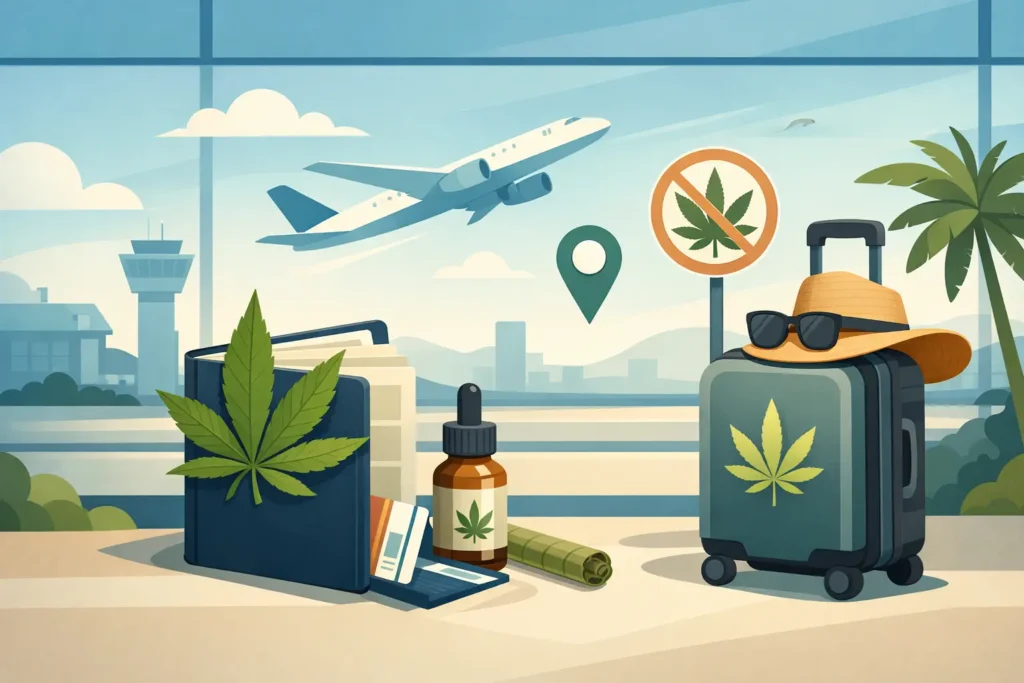
You can land in a city full of cannabis shops and still get yourself into trouble before dinner. Maybe the store is legal but public smoking is not. Maybe visitors can buy, but cannot consume at hotels. Maybe the country has decriminalized possession while sales remain illegal. Cannabis travel is not about assuming every weed-friendly headline means the same thing. It is about knowing the local rules before you pack your bags.
The good news: a little destination research goes a long way. Whether you are planning a weekend in Las Vegas, a café stop in Amsterdam, a social club visit in Barcelona, or a longer stay in Bangkok, the goal is simple. Enjoy the local culture, avoid legal weed hiccups, and leave with good memories rather than a fine, a confiscated bag, or a difficult conversation at the airport.
Cannabis Travel Starts Before You Leave
The first rule is the least exciting and the most useful: do not carry cannabis across an international border. That includes a small joint left in a jacket pocket, a vape cartridge, gummies, CBD products containing THC, and products bought legally at home. A place can have legal dispensaries on both ends of your trip and still treat cross-border transport as a serious offense.
Domestic travel can be complicated, too. In the United States, state laws may allow adult-use cannabis, but federal law applies at airports and across state lines. Flying from one legal state to another is not the same as carrying a legal product through a fully legal system. When in doubt, arrive empty-handed and make decisions only after checking the rules at your destination.
This is also why a cannabis-friendly vacation should not begin with a packing list full of products. Bring normal travel essentials. Plan to purchase locally only where legal, and only if local access makes sense for your trip.
Know Which Kind of “Legal” You Are Visiting
Travelers often use the word legal as if it has one meaning. It does not. A destination may permit personal possession, tolerate small amounts, allow medical use only, license retail stores, permit member-based clubs, or prohibit nearly everything while looking the other way in certain tourist areas. Those are very different situations.
Retail markets are usually the easiest to understand. In places with licensed stores, travelers may have clear age limits, purchase limits, ID requirements, packaging rules, and restrictions on where products can be used. Still, a legal purchase does not automatically give you permission to light up on the sidewalk, in a park, on a hotel balcony, or in a rental car.
Social-club systems require more patience. In some destinations, cannabis access happens through private associations rather than storefront dispensaries. Membership, residency rules, guest policies, and consumption rules can vary. Do not assume a club will admit every tourist, and do not treat a private space as an excuse to ignore the law outside its door.
Decriminalization deserves even more caution. It may mean a small amount brings a lower penalty, not that cannabis is legal to buy or use. The gap between what is technically unlawful and what appears common on a busy street can be wide. As a visitor, you have less room for guesswork.
Check Rules at the City Level, Not Just the Country
Country-level laws set the framework, but cities often shape the experience. A capital city may have more visible shops, clearer visitor information, and designated consumption venues. A beach town may have stricter public-order enforcement. A resort can ban smoking everywhere on its property even if the surrounding region permits adult use.
That is why destination-specific research matters. Look for answers to practical questions: Can adults buy cannabis? Is a passport accepted as ID? Is public consumption banned? Are there legal places to consume? Are there neighborhood-specific restrictions? What happens if you are caught with more than the allowed amount?
Rules also change. A guide published two years ago may still describe the vibe accurately while missing a new purchase limit, smoking ban, or licensing change. Check current local information close to departure, especially for destinations where cannabis policy is moving quickly.
Choose Access That Does Not Create New Problems
Licensed, regulated access is usually the safer choice where it exists. It reduces the chance of scams, mislabeled products, unsafe concentrates, and awkward encounters with police. You can ask about potency, portion sizes, and product formats without relying on a stranger’s promises in a tourist district.
Unregulated street purchases bring more than legal risk. Visitors are easy targets for inflated prices, bait-and-switch deals, stolen cash, and products that are not what they claim to be. A person offering weed outside a famous attraction is not necessarily offering a local shortcut. They may be offering you a bad start to the day.
If legal access is limited or unclear, it may be better to skip cannabis on that leg of the trip. That is not a failure of the itinerary. Great food, museums, beaches, nightlife, and local neighborhoods are still there. Responsible cannabis travel means recognizing when the risk-reward balance is not in your favor.
Consumption Is Usually the Hard Part
Finding cannabis and using cannabis are separate questions. In many legal markets, public consumption remains prohibited. “Public” can include sidewalks, parks, beaches, building entrances, transit stops, patios, hotel rooms, and even outdoor areas that look casual enough for a smoke.
Hotels and vacation rentals have their own policies. Smoke-free usually means smoke-free, regardless of local cannabis law. A balcony may feel private, but odor travels, alarms go off, and neighboring guests complain. Cleaning fees and eviction from a rental can ruin a trip just as effectively as a ticket.
Look for clearly permitted private settings or licensed consumption spaces where available. If there is no lawful, practical place to consume, choose not to buy more than you can responsibly manage. Edibles are not a workaround for every rule either. They can still be prohibited in public places, and their delayed effects make sightseeing, cycling, swimming, and driving a poor mix.
Pace Yourself in an Unfamiliar Place
Travel changes how cannabis feels. Jet lag, heat, altitude, dehydration, an empty stomach, alcohol, and unfamiliar products can all make a normal dose hit differently. That 10 mg edible you handle well at home may be a lot after a long flight and two cocktails.
Start low, especially with edibles and high-potency concentrates. Give edibles plenty of time before taking more. Keep water, food, your phone, and your hotel address handy. If you are traveling with friends, make sure someone stays clear-headed enough to handle directions, reservations, and unexpected problems.
Never drive after using cannabis. Do not ride a scooter, rent a boat, or take on a mountain trail when you are impaired either. Local penalties for impaired driving can be severe, and travel insurance may not help much if your judgment caused the problem.
Read the Room and Respect Local Culture
Cannabis culture is not identical from one destination to the next. In one city, adults may treat it like a normal part of nightlife. In another, people may use discreetly in private while older residents, families, and business owners see public use as disrespectful. A relaxed attitude from one group of tourists does not represent the whole community.
Keep your consumption low-key. Do not smoke near children, religious sites, schools, crowded transit areas, or restaurant tables. Do not pressure travel companions to participate. Avoid taking photos inside cannabis businesses or clubs unless staff clearly allow it. Privacy matters in places where laws and social attitudes are still unsettled.
A little courtesy protects more than your own trip. Visitors who act entitled can make life harder for locals, businesses, and future travelers. The best cannabis travelers bring curiosity, not a demand that every destination work like home.
A Quick Pre-Trip Cannabis Travel Check
Before departure, make sure you can answer these questions:
- Is adult-use, medical-use, decriminalized possession, or prohibition the local reality?
- Can visitors legally buy cannabis, and what ID or age requirement applies?
- Where is consumption actually allowed?
- What products and quantities are permitted?
- What are the rules for airports, driving, hotels, rentals, and public spaces?
If any answer is vague, treat that uncertainty as a reason to slow down. Local Weed Guide exists for exactly this kind of planning: getting past broad headlines and into the real traveler questions for a specific city or country.
Your next weed-friendly destination does not need to be complicated. Research the exact place you are going, buy only through legal channels when they are available, keep cannabis out of border crossings, and follow the local pace. Then you can spend less time worrying about the rules and more time enjoying where you are.
Mike ( miketeefey@gmail.com ) is absolutely incredible. The weed he sells knocked me off my socks. He is very helpful, friendly and responsive.