
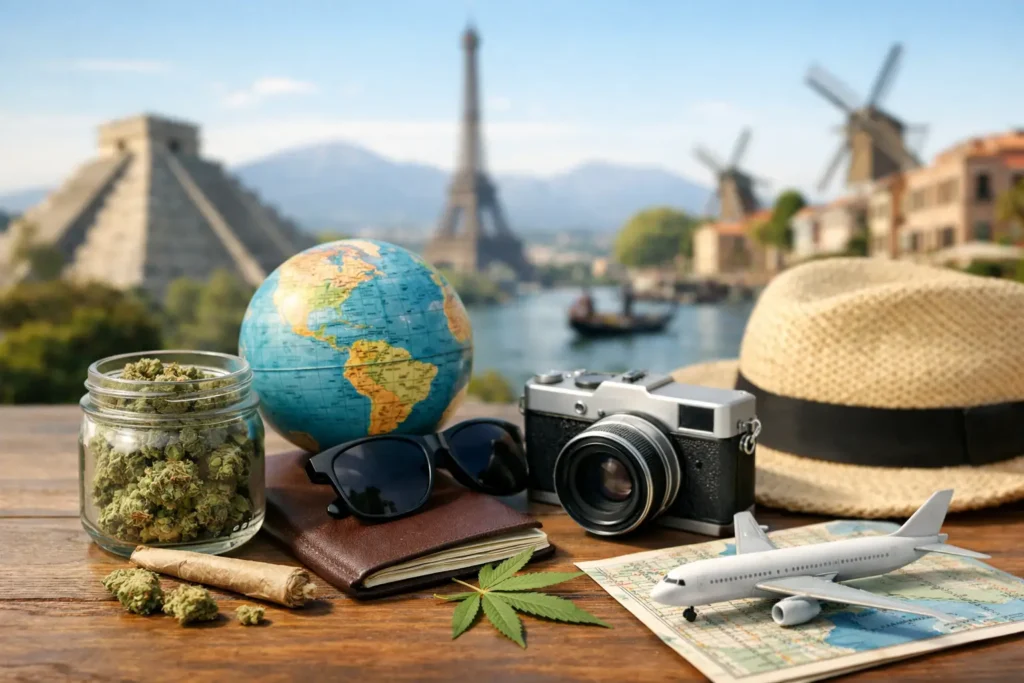
A cannabis-friendly vacation can go sideways fast when a traveler assumes that legalization means open access. The reality behind countries permitting tourist cannabis use is more complicated: a country may allow adult possession, but not let visitors buy; tolerate coffee shops, but restrict them by city; or allow private use while banning public smoking. Your best move is to treat every destination as its own rulebook.
For travelers who want to enjoy local cannabis culture without collecting legal weed hiccups, the key question is not simply, “Is weed legal?” Ask whether a visitor can legally obtain it, where it can be consumed, and what happens the moment you leave the city or cross a border.
The short answer: very few countries offer easy tourist access
Canada is the clearest example of a country where adult travelers can generally buy recreational cannabis through regulated stores. In much of the world, though, tourist access falls into a gray zone between decriminalization, limited possession rights, private clubs, medical programs, and locally tolerated sales.
That difference matters. A traveler may be able to possess a small amount without facing criminal penalties, yet still have no lawful place to purchase it. Another destination may have famous cannabis venues that operate under a tolerance policy rather than full national legalization. “Cannabis-friendly” is useful travel shorthand, but it is not a legal category.
Canada: the most straightforward legal option
For adult travelers, Canada remains one of the simplest places to plan a legal cannabis trip. Recreational cannabis is legal nationwide, while provinces and territories set many of the practical rules. Legal purchase ages are usually 18 or 19 depending on where you are, and licensed retailers sell flower, edibles, vapes, concentrates, and other regulated products.
The experience still changes by destination. Toronto, Vancouver, Montreal, and smaller cities can have very different store density, consumption bylaws, and attitudes toward public use. Hotels may ban smoking and vaping anywhere on the property. Rental hosts can do the same. Public consumption rules can also be stricter than travelers expect, especially near entrances, patios, transit stops, schools, and parks.
One hard line applies everywhere: never take cannabis across an international border. That includes driving to the United States, flying abroad, or carrying a forgotten edible in your bag. Cannabis may be legal where you bought it, but border law is a separate issue.
The Netherlands: tolerant coffee shops, local rules
The Netherlands belongs in any conversation about countries permitting tourist cannabis use, but with a major asterisk. Coffee shops in many Dutch cities are allowed to sell small quantities of cannabis under a long-running tolerance policy. This is not the same as full legalization, and local authorities decide how the policy works in practice.
Amsterdam has historically been the easiest destination for adult visitors seeking coffee shop culture, although rules on smoking, public behavior, and neighborhood nuisance can be tightly enforced. Some municipalities have used resident-only policies or other restrictions, so a coffee shop experience in Amsterdam should not be assumed in Maastricht, Rotterdam, or a smaller border town.
Keep the setting respectful. Coffee shops are not an invitation to light up on every canal bridge, hotel balcony, or packed sidewalk. Buy only from established venues, follow the house rules, and do not carry cannabis into another country. A relaxed atmosphere does not erase the law.
Countries where legal status does not equal tourist buying
Several countries are often described online as “legal,” but they are not straightforward recreational destinations for visitors. This is where travelers get tripped up by headlines that leave out the fine print.
Uruguay: legal for residents, not a tourist dispensary stop
Uruguay was the first country to legalize cannabis nationally, and its system is carefully regulated. Legal access is built around registered citizens and permanent residents. Foreign visitors should not assume they can walk into a pharmacy and buy recreational cannabis.
That makes Uruguay significant in global cannabis policy, but it is not Canada-style cannabis tourism. Visitors should also avoid informal offers. If the regulated system is not open to you, an unlicensed workaround is not a travel tip – it is a risk.
Germany, Malta, and Luxembourg: reforms with limited visitor access
Germany’s adult-use reforms permit certain possession and personal cultivation rights, but they do not create a conventional tourist retail market. Cannabis social clubs have membership and residency-related requirements, meaning a short-term visitor should not count on joining one or buying cannabis legally during a weekend in Berlin.
Malta and Luxembourg also demonstrate why the word “legal” needs context. Their reforms focus heavily on private possession, home growing, nonprofit structures, or private-use rules rather than storefront sales for travelers. These are important legal shifts, but they are not a green light for vacationers to arrive expecting dispensaries.
If your trip is centered on museums, food, nightlife, and a little cannabis culture, these destinations may still be interesting. Just plan as if legal retail access is unavailable unless current local rules clearly say otherwise.
Thailand: changing rules demand extra caution
Thailand became a major cannabis travel headline after its rapid market expansion, but its framework has changed repeatedly. Rules around flower, medical documentation, retail sales, and permitted use have shifted faster than many travel articles can be updated.
That makes Thailand a destination where pre-trip verification is essential. Do not rely on old social posts, a shopfront full of jars, or what another traveler did last year. Check the current national requirements, then check whether your hotel, beach area, temple district, or local venue has stricter rules. Public smoking has long been a bad idea, even during periods of looser access.
Places with famous cannabis scenes but no simple legal promise
The United States, Spain, Jamaica, and Mexico are frequently on cannabis travelers’ wish lists, yet none should be treated as a nationally simple answer.
In the United States, adult-use cannabis depends on the state, and sometimes the city. A visitor can often buy legally in states such as California, Colorado, Nevada, or New York if they meet the local age requirement and show valid government identification. But cannabis remains illegal under federal law, and taking it across state lines is illegal even between two legal states. Las Vegas dispensary access is one thing; carrying a vape into Arizona is another.
Spain is known for private cannabis social clubs, especially in Barcelona. Club culture is not the same as open legal retail, and tourist membership can be legally uncertain or subject to changing local enforcement. Avoid street sellers and anyone promising instant, no-questions-asked access.
Jamaica has decriminalized limited possession and recognizes religious and medical pathways, but that does not automatically create a carefree recreational market for every visitor. Mexico has had major court decisions and policy changes around personal use, while commercial rules and enforcement remain uneven. In both places, local guidance matters more than a broad “weed is legal” claim.
How to plan a responsible cannabis-friendly trip
Before packing, check the current law for your exact destination, not just the country. A capital city, resort area, island, or border region can enforce rules differently. Focus on four practical details: the legal age, whether visitors can purchase, where consumption is allowed, and the possession limit.
Use licensed stores or clearly regulated venues whenever they are available. Informal products can bring legal trouble, contamination concerns, or scams – none of which belongs on your vacation itinerary. Be especially careful with edibles and high-potency extracts. A product that feels familiar at home may be dosed, labeled, or regulated differently abroad.
Respect the people around you, too. Keep cannabis away from children, do not drive after consuming, and do not smoke in crowds simply because you smell weed nearby. Local culture can be far more conservative than local possession laws suggest.
The best cannabis travel memories usually come from knowing the rules before you land, then giving yourself room to enjoy the destination beyond the dispensary or coffee shop. Pack your curiosity, leave the assumptions at home, and let local law and etiquette set the pace.